If you’ve been struggling to shed those stubborn pounds, you’re not alone. Millions of people around the world share the same frustration—stepping on the scale week after week only to see minimal progress, or worse, no change at all. The fitness industry is flooded with conflicting information, fad diets, and miracle workout programs that promise overnight transformations. But here’s the truth: sustainable fat loss requires a strategic approach that combines proper nutrition, effective exercise, and consistency.
Let me share a quick story. A few years ago, I met Sarah, a busy marketing executive who’d tried everything—from juice cleanses to hour-long cardio sessions six days a week. Despite her efforts, her body composition barely changed. The problem wasn’t her dedication; it was her approach. Once she discovered the best workouts to lose body fat and structured her training around proven principles, everything changed. Within six months, she lost 25 pounds of fat, gained lean muscle, and completely transformed her relationship with fitness.
In this comprehensive guide, we’ll dive deep into the most effective strategies for burning body fat, building lean muscle, and creating a sustainable fitness routine that fits your lifestyle. Whether you’re a complete beginner or someone who’s been exercising for years, this article will provide actionable insights to help you finally achieve your goals.
Understanding Body Fat Loss: The Science Behind the Process
Before we jump into specific workouts and strategies, it’s crucial to understand how fat loss actually works. Many people operate under misconceptions that sabotage their progress before they even begin.
The Caloric Deficit: Your Foundation for Fat Loss
At its core, losing body fat requires creating a caloric deficit—burning more calories than you consume. This doesn’t mean starving yourself or doing endless hours of cardio. It means finding a sustainable balance where your body taps into stored fat for energy while preserving lean muscle mass.
Your body burns calories through three primary pathways:
Basal Metabolic Rate (BMR): The calories your body burns at rest just to keep you alive—breathing, circulation, cell production, and other vital functions. This typically accounts for 60-75% of your total daily energy expenditure.
Exercise Activity Thermogenesis (EAT): The calories burned through intentional exercise and physical activity.
Non-Exercise Activity Thermogenesis (NEAT): The energy expended for everything that isn’t sleeping, eating, or formal exercise—fidgeting, walking to your car, taking the stairs, doing household chores.
Understanding these components helps you realize that exercise is just one piece of the puzzle. However, the right type of exercise can dramatically accelerate your results.
Why Traditional Cardio Isn’t Always the Answer
For decades, conventional wisdom suggested that long, steady-state cardio was the best workout to lose weight. While cardiovascular exercise certainly has its place in a well-rounded fitness program, relying solely on jogging or cycling can actually work against your fat loss goals.
Here’s why: Extended cardio sessions can lead to muscle loss along with fat loss. Since muscle tissue is metabolically active (it burns calories even at rest), losing muscle means lowering your BMR. This creates a vicious cycle where you need to eat less and less to continue losing weight, eventually hitting a frustrating plateau.
Strength Training: The Secret Weapon for Fat Loss
If you’re serious about transforming your body composition, strength training should be your primary focus. A well-designed weight training program for weight loss offers benefits that cardio simply can’t match.
The Afterburn Effect: Burning Calories Long After Your Workout
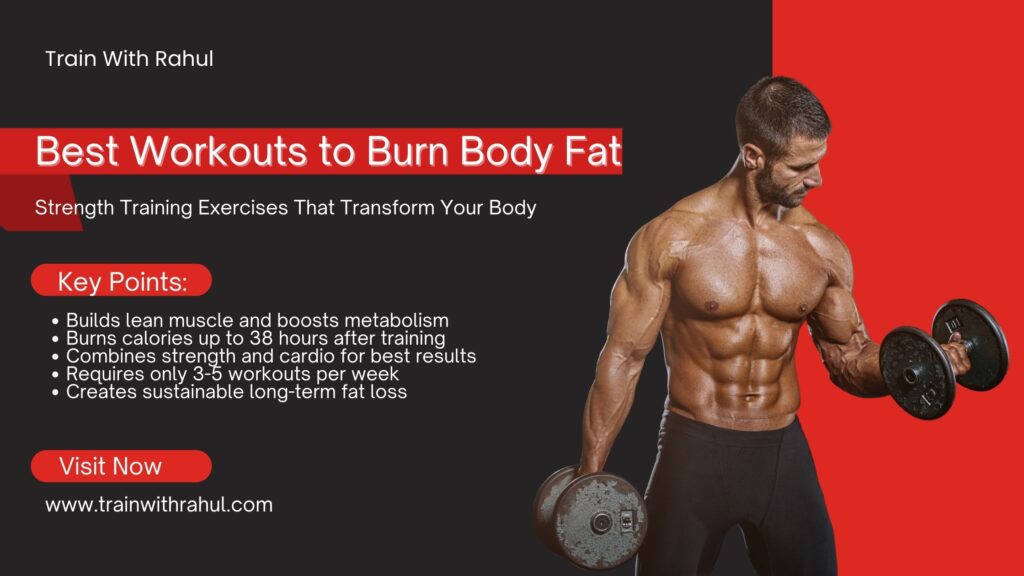
One of the most significant advantages of strength training is something called Excess Post-Exercise Oxygen Consumption (EPOC), commonly known as the “afterburn effect.” After an intense resistance training session, your body continues burning calories at an elevated rate for up to 38 hours as it repairs muscle tissue, replenishes energy stores, and returns to homeostasis.
Compare this to a moderate-intensity cardio session, where calorie burning essentially stops once you finish exercising. This metabolic boost from strength training compounds over time, creating a powerful fat-burning environment even on rest days.
Building Lean Muscle: Your Metabolic Furnace
Every pound of muscle you add to your frame increases your resting metabolic rate. While estimates vary, research suggests that each pound of muscle burns approximately 6-10 calories per day at rest, compared to just 2-3 calories for fat tissue. This might not sound like much, but it adds up significantly over time.
Imagine adding 10 pounds of lean muscle over the course of a year. That’s an additional 60-100 calories burned daily without any extra effort—equivalent to an extra 22,000-36,500 calories burned annually, or roughly 6-10 pounds of fat. This is why strength training creates such dramatic, long-lasting transformations.
The Most Effective Strength Training Exercises for Weight Loss
Not all exercises are created equal when it comes to fat loss. The most effective movements are compound exercises—multi-joint movements that engage multiple muscle groups simultaneously, burning more calories and creating greater metabolic demand.
Foundational Lower Body Movements
Squats: The king of all exercises, squats engage your quadriceps, hamstrings, glutes, core, and lower back. They create significant metabolic stress and promote the release of growth hormone and testosterone, which are crucial for fat loss and muscle building.
Variations include back squats, front squats, goblet squats, and Bulgarian split squats. Start with bodyweight or goblet squats to master form before progressing to barbell variations.
Deadlifts: Perhaps the most functional exercise you can do, deadlifts work your entire posterior chain—hamstrings, glutes, lower back, upper back, and grip. They build tremendous strength and create a massive caloric demand.
Beginners should start with Romanian deadlifts or trap bar deadlifts before progressing to conventional deadlifts with a barbell.
Lunges: Unilateral exercises like lunges not only build leg strength but also improve balance and coordination while exposing and correcting muscular imbalances between sides.
Upper Body Power Movements
Push-ups and Bench Press: These horizontal pressing movements target your chest, shoulders, and triceps. Push-ups are an excellent starting point, with endless variations to increase or decrease difficulty.
Pull-ups and Rows: Vertical and horizontal pulling movements balance out your pressing exercises while building a strong, defined back. These exercises also engage your biceps and core stabilizers.
Overhead Press: Pressing weight overhead requires full-body tension and coordination, making it an incredibly effective movement for building shoulder strength and burning calories.
Core and Full-Body Integration
Planks and Dead Bugs: Static and dynamic core exercises build the foundation for all other movements while improving posture and reducing injury risk.
Kettlebell Swings: This explosive hip-hinge movement combines strength and cardiovascular conditioning, making it perfect for fat loss circuits.
Designing Your Weight Training Program for Weight Loss
Having a random collection of exercises isn’t enough—you need a structured program that progressively challenges your body while allowing adequate recovery.
Training Frequency and Split Options
For most people, training 3-5 days per week produces optimal results. Here are three effective approaches:
Full-Body Training (3 days/week): Ideal for beginners or those with limited time. Each session includes exercises for all major muscle groups. This approach maximizes frequency while allowing adequate recovery.
Example: Monday, Wednesday, Friday—each day includes squats or deadlifts, a press movement, a pull movement, and core work.
Upper/Lower Split (4 days/week): Divide your training into upper body and lower body sessions, alternating between them. This allows higher training volume while maintaining adequate recovery.
Example: Monday (Upper), Tuesday (Lower), Thursday (Upper), Friday (Lower)
Push/Pull/Legs (5-6 days/week): For more advanced lifters, this split separates pushing movements, pulling movements, and leg exercises into distinct sessions.
Progressive Overload: The Key to Continuous Improvement
Your body adapts to stress by becoming stronger and more efficient. To continue making progress, you must gradually increase the training stimulus. This can be achieved through:
- Increasing weight lifted
- Performing more repetitions with the same weight
- Completing more sets
- Reducing rest periods between sets
- Improving exercise technique and range of motion
Track your workouts in a journal or app, and aim to beat your previous performance in at least one metric each week.
Optimal Rep Ranges for Fat Loss
While all rep ranges have value, research suggests that moderate rep ranges (8-12 repetitions) with challenging weights create an ideal combination of muscle building and metabolic demand. This “hypertrophy zone” produces significant metabolic stress and muscle damage, both of which contribute to increased calorie burn.
However, incorporating some lower-rep strength work (3-6 reps) and higher-rep endurance sets (15-20 reps) can provide additional benefits and prevent adaptation.
Strategic Cardio: Enhancing Your Fat Loss Results
While strength training should be your foundation, strategic cardiovascular exercise can accelerate fat loss when used appropriately.
High-Intensity Interval Training (HIIT)
HIIT involves short bursts of maximum effort followed by brief recovery periods. This training style produces similar metabolic benefits to strength training, including EPOC and improved insulin sensitivity, while requiring much less time than traditional cardio.
A simple HIIT protocol might include:
- 20 seconds of all-out effort (sprinting, bike sprints, battle ropes, burpees)
- 40 seconds of active recovery
- Repeat for 10-20 minutes
HIIT sessions should be limited to 2-3 times per week to avoid overtraining and allow adequate recovery for your strength sessions.
Low-Intensity Steady State (LISS)
While high-intensity exercise burns more calories per minute, low-intensity cardio has its place in a comprehensive program. Activities like walking, leisurely cycling, or swimming at a comfortable pace:
- Burn calories without creating significant recovery demands
- Can be performed frequently without interfering with strength training
- Provide active recovery by increasing blood flow
- Reduce stress and improve mental well-being
Walking 10,000 steps daily is an excellent LISS goal that most people can achieve by making small lifestyle adjustments.
Nutrition: The Non-Negotiable Component
You can’t out-train a bad diet. While this guide focuses on exercise strategies, understanding basic nutrition principles is essential for maximizing your results.
Protein: Your Fat Loss Ally
Adequate protein intake serves multiple critical functions during fat loss:
- Preserves lean muscle mass while in a caloric deficit
- Increases satiety, helping you feel full and satisfied
- Has the highest thermic effect of all macronutrients (your body burns calories digesting it)
- Supports recovery from strength training
Aim for 0.7-1 gram of protein per pound of body weight daily. Excellent sources include chicken, fish, lean beef, eggs, Greek yogurt, cottage cheese, and plant-based options like tofu and legumes.
Carbohydrates and Fats: Balancing Energy Needs
After meeting your protein requirements, distribute the remaining calories between carbohydrates and fats based on personal preference and activity level.
Carbohydrates fuel high-intensity exercise and support recovery. Active individuals typically perform better with moderate to higher carb intake (40-50% of total calories).
Fats support hormone production, nutrient absorption, and satiety. Never drop below 20-25% of total calories from fat, as this can negatively impact hormone levels and overall health.
Meal Timing and Frequency
Despite popular claims, meal timing has a minimal impact on fat loss compared to total daily intake. Eat in a pattern that supports your lifestyle, energy levels, and adherence. Whether you prefer three square meals, five small meals, or intermittent fasting, the best approach is the one you can maintain consistently.
Recovery and Sleep: The Overlooked Fat Loss Factors
Your body doesn’t transform during workouts—it transforms during recovery. Treating recovery as seriously as training is essential for optimal results.
The Power of Quality Sleep
Sleep deprivation wreaks havoc on fat loss efforts:
- Increases hunger hormones (ghrelin) and decreases satiety hormones (leptin)
- Impairs insulin sensitivity, making it harder to lose fat
- Reduces testosterone and growth hormone production
- Decreases workout performance and recovery
- Increases cortisol, which can promote fat storage, especially around the midsection
Prioritize 7-9 hours of quality sleep nightly. Create a consistent sleep schedule, minimize blue light exposure before bed, keep your bedroom cool and dark, and avoid caffeine in the afternoon.
Active Recovery and Mobility
Rest days don’t mean sitting on the couch all day. Light activity, stretching, foam rolling, and mobility work:
- Increase blood flow to aid recovery
- Reduce muscle soreness
- Prevent stiffness and maintain range of motion
- Provide mental refreshment from intense training
Consider yoga, walking, swimming, or dedicated mobility sessions on rest days.
Tracking Progress: Looking Beyond the Scale
The scale is just one metric—and often a misleading one. Water retention, hormonal fluctuations, digestive contents, and muscle gain can all affect scale weight independent of fat loss.
Track multiple metrics for a complete picture:
Progress Photos: Take weekly photos from the front, side, and back in consistent lighting and clothing. Visual changes often appear before scale changes.
Body Measurements: Measure your waist, hips, chest, arms, and thighs monthly. Decreasing measurements combined with stable or increasing weight often indicates fat loss and muscle gain.
Performance Metrics: Are you getting stronger? Can you do more reps, lift heavier weights, or run faster? Performance improvements indicate positive body composition changes.
How Your Clothes Fit: Perhaps the most practical metric—if your jeans are getting looser, you’re making progress.
Energy and Well-being: How do you feel? Improved energy, better sleep, enhanced mood, and increased confidence are valuable indicators of success.
Common Mistakes That Sabotage Fat Loss
Even with the best intentions, many people unknowingly undermine their progress. Avoid these common pitfalls:
Doing Too Much, Too Soon
Enthusiasm is wonderful, but dramatically increasing exercise volume and slashing calories simultaneously creates a recipe for burnout, injury, and metabolic adaptation. Start conservatively and make gradual adjustments.
Neglecting Strength for Cardio
Remember: strength training builds the metabolic machinery that burns fat 24/7. Prioritize resistance training and use cardio as a supplement, not the foundation.
Inconsistent Effort
Two weeks of perfect adherence followed by two weeks of sporadic effort won’t produce results. Moderate, consistent effort beats perfection with frequent breaks every time.
Ignoring Hunger and Energy Signals
Your body communicates through hunger, energy, and performance. If you’re constantly exhausted, ravenously hungry, or experiencing significant strength losses, your deficit might be too aggressive.
Comparing Your Journey to Others
Everyone’s body responds differently based on genetics, training history, stress levels, sleep quality, and countless other factors. Focus on your own progress and celebrate your victories.
Creating a Sustainable Lifestyle
The most important principle of all: sustainability trumps intensity. A moderate program you can maintain for years produces infinitely better results than an extreme program you abandon after three weeks.
Building Habits, Not Relying on Motivation
Motivation is fleeting—discipline and habits are what create lasting change. Start small, stack new habits onto existing ones, and celebrate consistency over perfection.
Instead of overhauling your entire life overnight, try:
- Adding one strength training session per week
- Increasing daily steps by 2,000
- Preparing protein-rich breakfasts on Sunday for the week
- Going to bed 15 minutes earlier
As these habits become automatic, add new ones.
Finding Enjoyment in the Process
If you hate every minute of your workouts, you won’t stick with them. Experiment with different training styles, exercises, and environments until you find what resonates with you. Join a group class, train with a friend, listen to engaging podcasts during cardio, or work with a coach for accountability and personalization.
Accepting Imperfection
Life happens. You’ll miss workouts, overeat at celebrations, and face periods of high stress that disrupt your routine. This is normal and doesn’t negate your progress. What matters is getting back on track without guilt or self-criticism.
Conclusion
Transforming your body composition is a journey that requires patience, consistency, and a strategic approach. By prioritizing strength training exercises for weight loss, creating a moderate caloric deficit, consuming adequate protein, and allowing proper recovery, you’ll build a leaner, stronger, more capable body that serves you for life.
Remember Sarah from the beginning of this article? Her success came not from finding a magic solution, but from embracing sustainable practices that fit her lifestyle. She learned to strength train effectively, balanced her nutrition without obsessing, and most importantly, remained consistent even when progress seemed slow.
The truth is, there’s no shortcut to lasting fat loss. But with the right approach—combining effective strength training, strategic cardio, proper nutrition, and adequate recovery—you’ll not only achieve your goals but maintain them for years to come.
Whether you’re just beginning your fitness journey or you’re an experienced exerciser looking to break through a plateau, the principles outlined in this guide provide a science-backed roadmap to success. And if you need additional guidance, support, or customized programming, working with a qualified professional through personal trainer online coaching can provide the accountability and expertise to accelerate your results while ensuring proper form and injury prevention. You can also DM me on my instagram. (rahulxalpha)
Your transformation starts with a single decision: to commit to the process, trust in proven principles, and show up consistently for yourself. The body you want is absolutely achievable—now it’s time to take action and make it happen.
FAQs
What is the fastest way to lose body fat?
The fastest sustainable way combines strength training 3-5 times weekly, a moderate caloric deficit, high protein intake (0.7-1g per pound of body weight), and adequate sleep.
How often should I do cardio for fat loss?
For optimal fat loss, perform 2-3 HIIT sessions weekly along with daily low-intensity activity like walking 8,000-10,000 steps, while prioritizing strength training as your foundation.
Can I lose fat without losing muscle?
Yes, by maintaining a moderate caloric deficit (300-500 calories), consuming adequate protein, following a progressive strength training program, and getting 7-9 hours of sleep nightly.
How long does it take to see visible fat loss results?
Most people notice changes in how clothes fit within 2-4 weeks, visible changes in progress photos around 4-6 weeks, and significant transformations after 12-16 weeks of consistent effort.
Is it better to lift weights or do cardio for weight loss?
Weight lifting is superior for long-term fat loss because it builds metabolically active muscle tissue, creates a longer afterburn effect, and preserves muscle mass during caloric deficits better than cardio alone.